
Climbing the Monolith and the Flooded History of Guatapé
Our family adventure in Colombia was a beautifully winding journey. After starting in the high-altitude capital of Bogotá and exploring the underground marvels of the salt cathedral in nearby Zipaquirá, we left the region behind to travel across the country.
Eventually, we arrived in the energetic city of Medellín. Our next move took us deep into the dramatic, green mountains of Antioquia to explore another spectacular destination: the vibrant lakeside town of Guatapé and its towering geological guardian, El Peñol.
Confronting the Stairway to the Sky
You see the Rock of Guatapé (Piedra del Peñol) long before you actually reach it. It’s a gargantuan, smooth granite monolith that looks almost out of place, erupting straight out of the earth. From the ground looking up, the concrete staircase built into a massive natural fissure on the rock’s face looks like a tiny, zigzagging thread.
Let's be honest—conquering over 700 steps is a physical challenge. Step by step, the air thins, your legs burn, and the surrounding landscape drops away. But the physical exertion pays off the moment your feet hit the summit's observation deck.
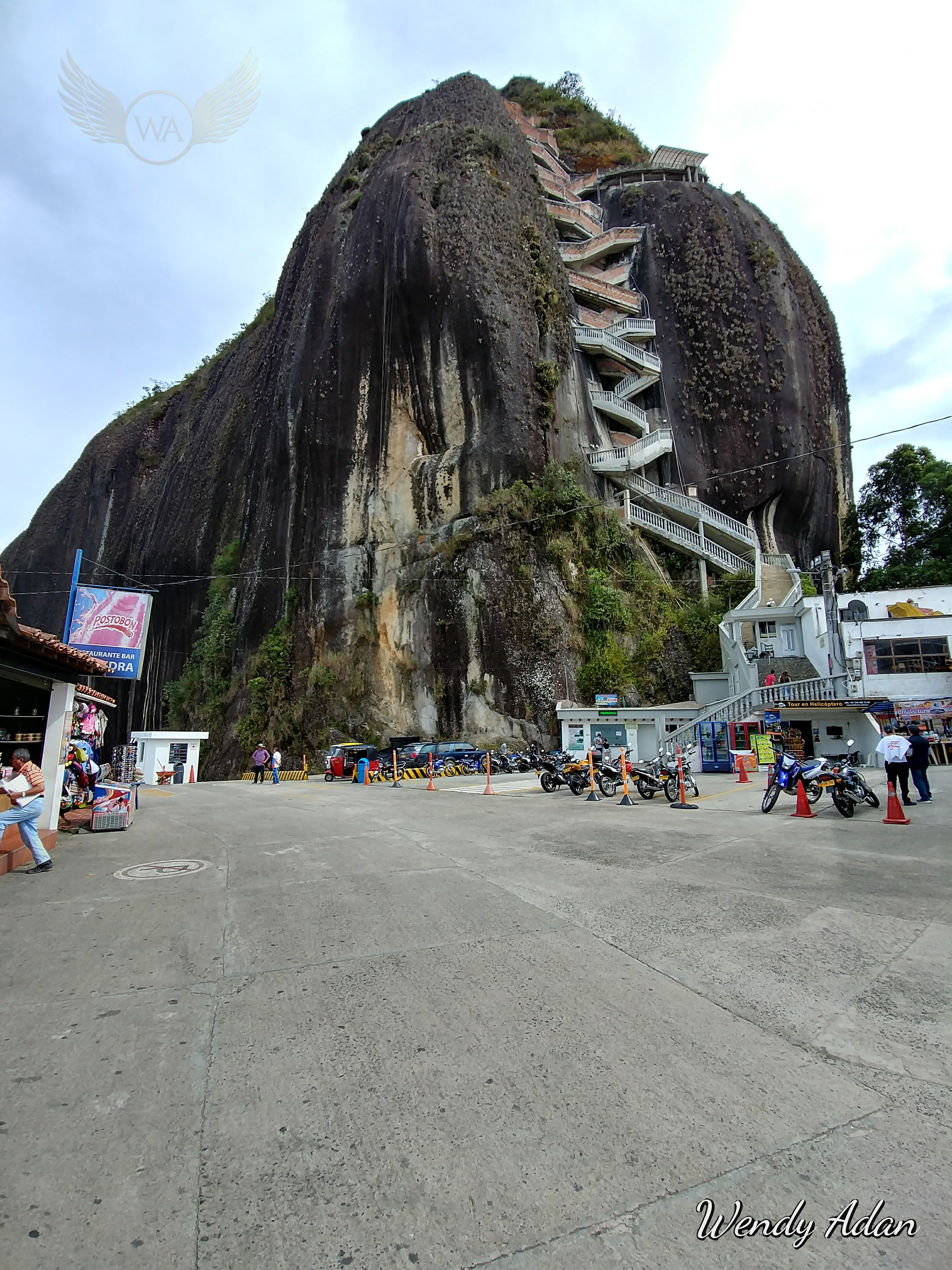
The winding concrete staircase of over 700 steps built into the side of the massive stone monolith, El Peñol (the Rock of Guatapé), in Antioquia, Colombia.
The view from the top is simply hypnotic. You are greeted by a breath-taking 360-degree panorama of an intricate, emerald-green archipelago. A sprawling labyrinth of sapphire-blue waterways and lush fingers of land stretches out to the horizon. It looks entirely otherworldly, resembling a vast, flooded mountain range.
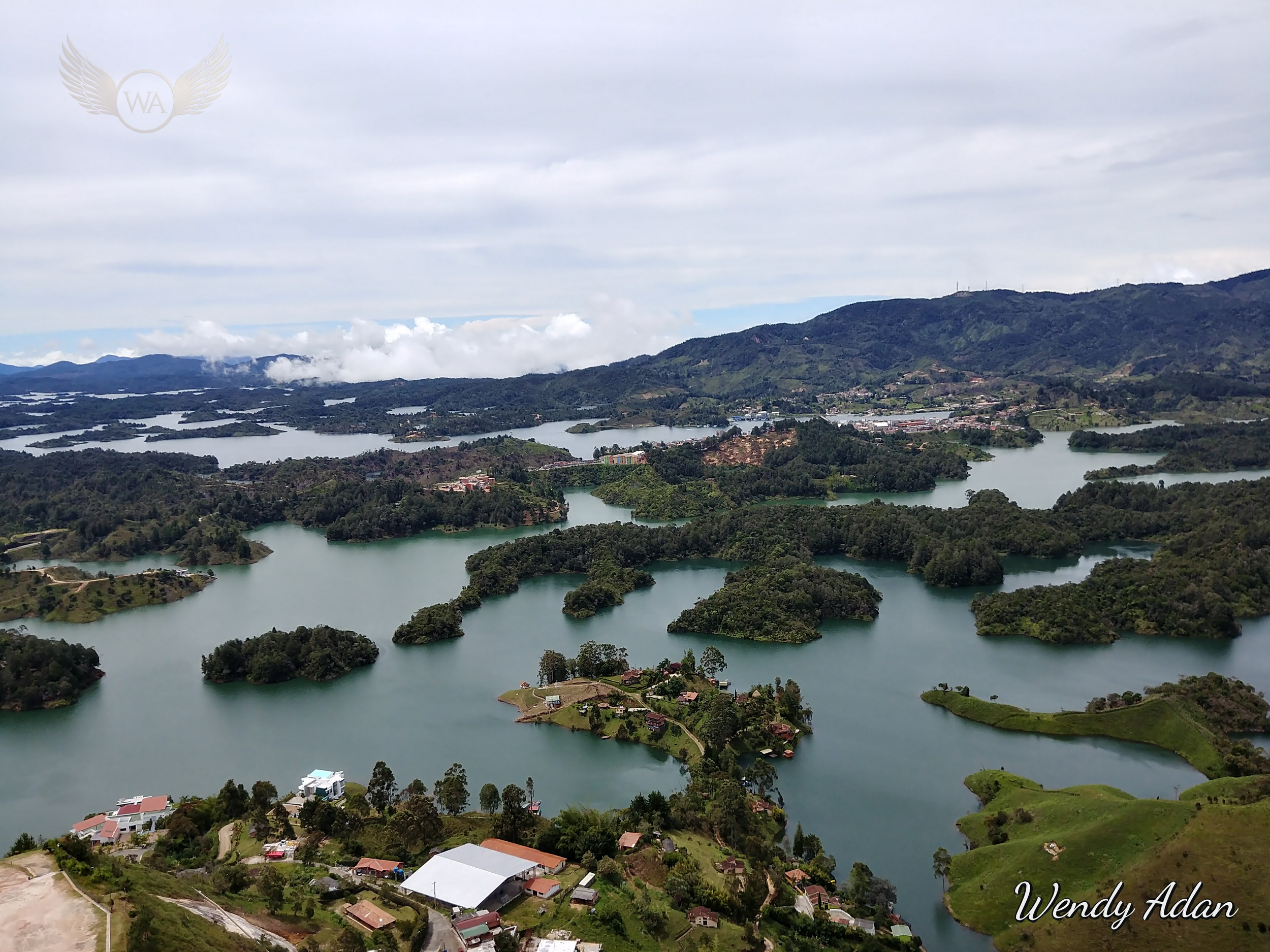
A breath-taking 360-degree panoramic view of the sprawling green islands and sapphire-blue waterways of the Guatapé reservoir in Colombia, taken from the summit of El Peñol.
Walking Through a Living Canvas
Once back on solid ground, we skipped the standard transport and caught a local tricycle taxi (tuk-tuk) to zip into the town of Guatapé itself. If you have ever wanted to walk through a real-life painting, this is the destination.
Widely recognized as one of the most colorful towns on the planet, Guatapé’s streets are a vibrant celebration of bright pastels and bold primary colors. But the true magic lies in the zócalos—the hand-painted, raised bas-relief illustrations running along the baseboards of every single building.
These illustrations aren't just decorative; they are visual storytellers. Walk past a bakery, and the zócalos depict rolling pins and fresh bread. Walk past a family home, and you’ll see portraits of sheep, sunflowers, or moments from local history. Strolling through these cobblestone alleys feels like flipping through a beautifully illustrated, open-air storybook.
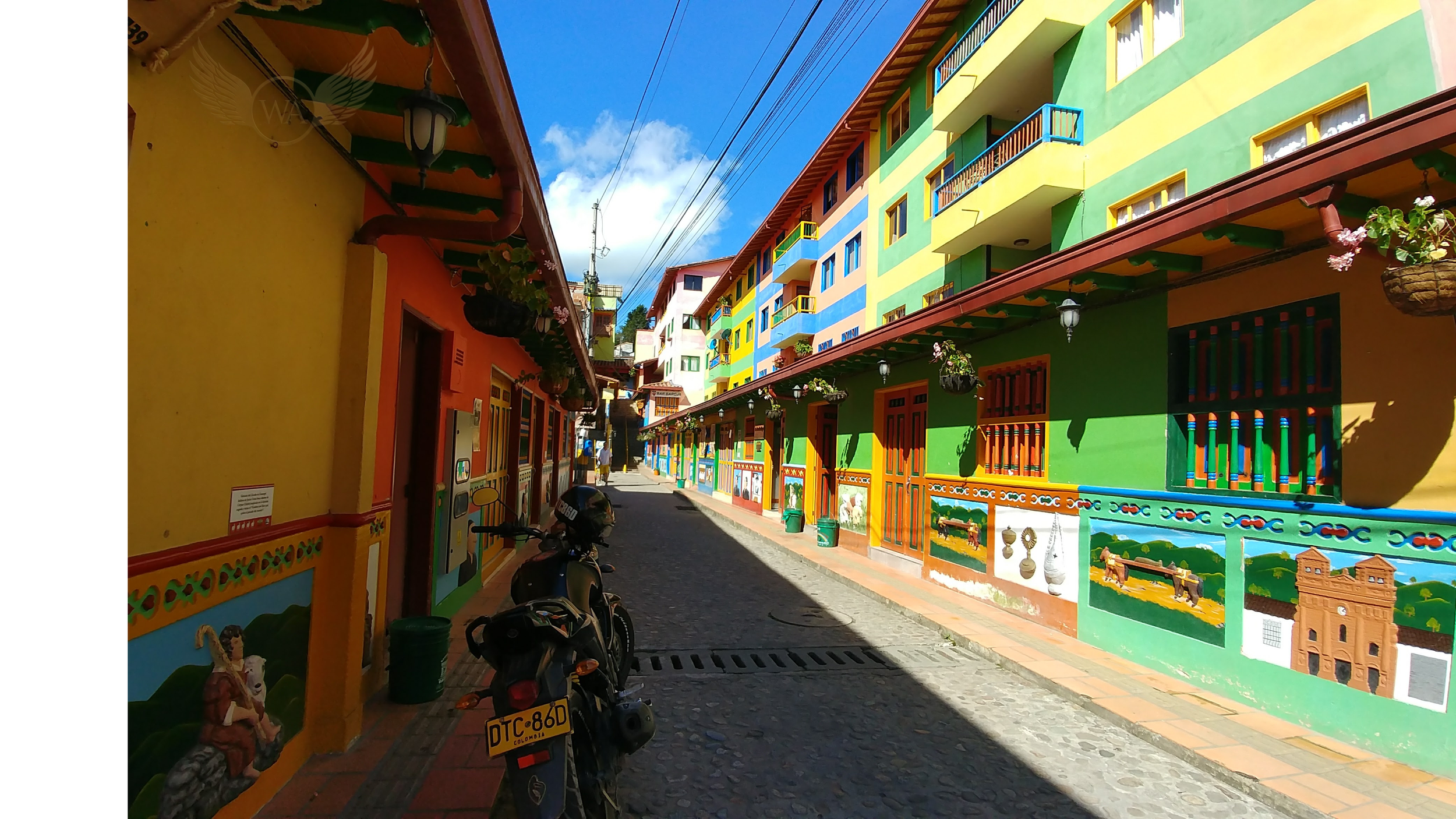
A vibrant, colorful street in Guatapé, Colombia, showcasing the brightly painted buildings and traditional hand-carved decorative bas-relief "zócalos" along the baseboards.
A Beauty Born of Water: The Flooded Old Town
While the sprawling blue lakes look completely natural from the summit of the rock, the water actually hides a bittersweet history.
In the 1970s, this entire valley was intentionally flooded to create a massive hydroelectric dam reservoir, which today generates a significant portion of Colombia's electricity. To make way for the project, the original historic town of El Peñol had to be completely submerged. Though the community was successfully relocated, the memory of the old town remains quietly preserved beneath the surface.
As we rode our tricycle taxi along the water's edge, we looked out across the shimmering reservoir. On clear days, you can take a boat ride out to the exact spot where the original town church's massive metal cross still rises defiantly out of the deep blue water—a quiet, striking memorial to the town that once was.
Leaving Guatapé, our journey through Colombia was far from over. From the mountain peaks of Bogotá to the deep salt mines of the Andes, the cultural heartbeat of Medellín, and the vibrant, flooded landscapes of Antioquia, every stop continued to reveal new chapters of this incredibly diverse country.